
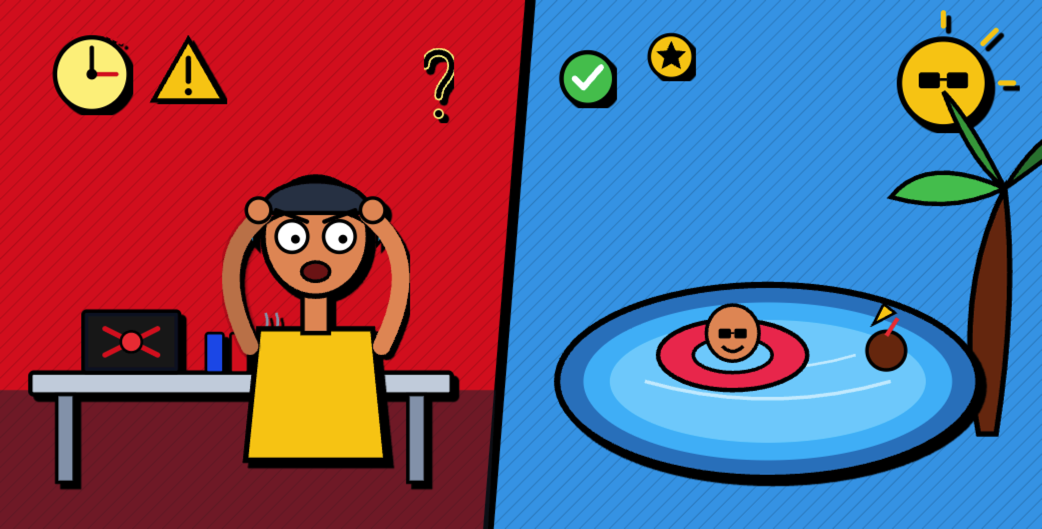

For fully remote teams, the announcement of an annual offsite comes with high anticipation: a coastal resort, poolside chats, cold drinks, and the chance to finally connect face-to-face with colleagues you’ve only ever seen in Zoom rectangles.
Fast forward to the actual event: You find yourself sitting in an air-conditioned hotel conference hall for 10 hours straight, frantically debugging code or polishing slides against a shifting deadline while staring out at the ocean through a glass window.
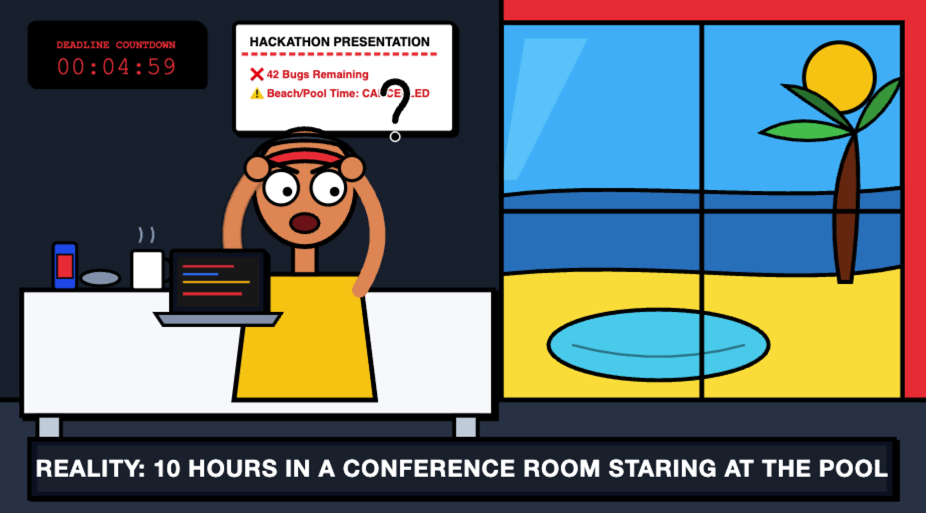
By the time presentations wrap up, dinner is ending, everyone is exhausted, and you realize you spent an entire trip at a luxury resort without ever stepping into the pool or touching the beach.
It’s the Beachside Hackathon Paradox: When an offsite attempts to combine high-intensity deliverables with relaxed team bonding without strict operational guardrails, work naturally expands to consume all available leisure.
Here is why this happens—and how applying core Agile and project management methodologies can save the next company offsite.
The Root Cause: Parkinson’s Law & Unconstrained Scope
In software engineering, Parkinson’s Law states that work expands to fill the time allotted for its completion.
During an offsite hackathon, teams naturally want to build something impressive. Without strict boundaries:
- Scope creeps as teams try to deliver fully functional features instead of high-level prototypes.
- Deadlines drift (“Can we get another hour before presentations?”).
- Sub-teams isolate into small working silos, defeating the primary purpose of the trip: broad, cross-functional human connection.
4 Project Methodologies to Fix the Company Offsite
If you are planning an engineering retreat, design sprint, or team hackathon, here are four operational frameworks to protect both team output and rest:
1. Micro-Timeboxing (Design Sprint Model)
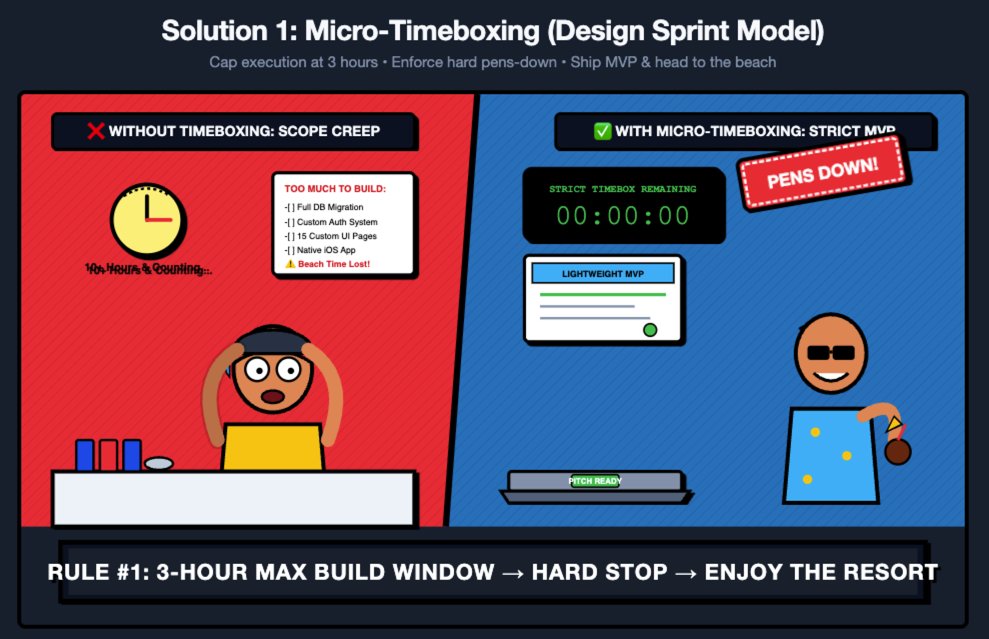
Instead of giving teams an entire day or evening to build, borrow from Jake Knapp’s Design Sprint framework:
- The Rule: Set a non-negotiable 3-to-4-hour maximum window for the hackathon.
- The Constraint: When the timer hits zero, pens down—regardless of build status.
- The Benefit: Forces teams to radically simplify their ideas down to a true Minimum Viable Product (MVP) or interactive prototype, leaving the afternoon completely free.
2. Strict WIP (Work in Progress) Limits
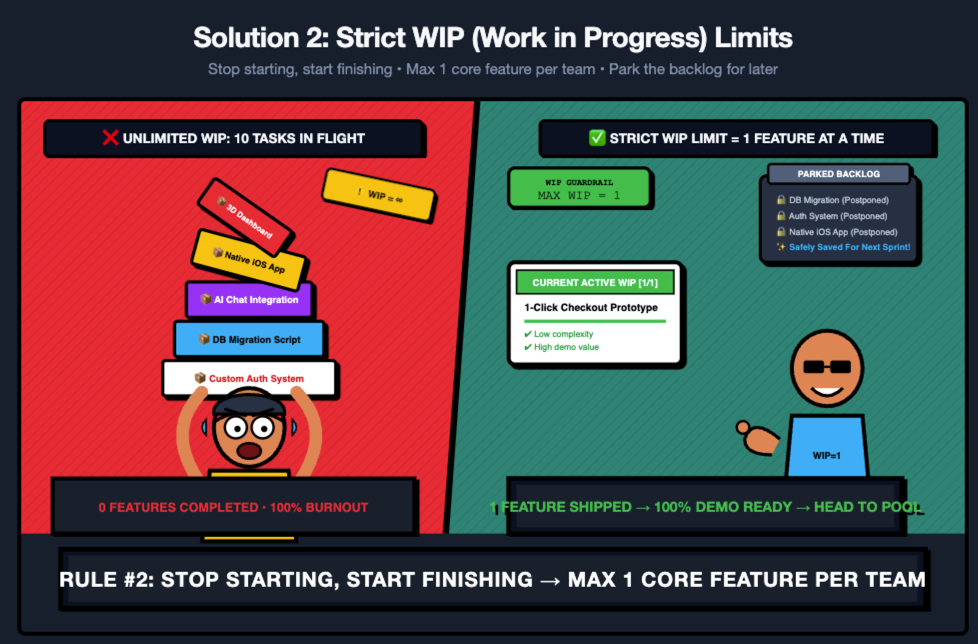
In Kanban, limiting WIP stops team overload. Applied to event planning:
- Limit each hackathon team to one core concept or pitch deck.
- If an idea requires heavy infrastructure setup, complex environment variables, or multi-hour debugging, flag it during ideation and pare it back immediately.
- Rule of thumb: If it can’t be demoed in 3 minutes, it’s too big for an offsite.
3. Dual-Track Event Architecture
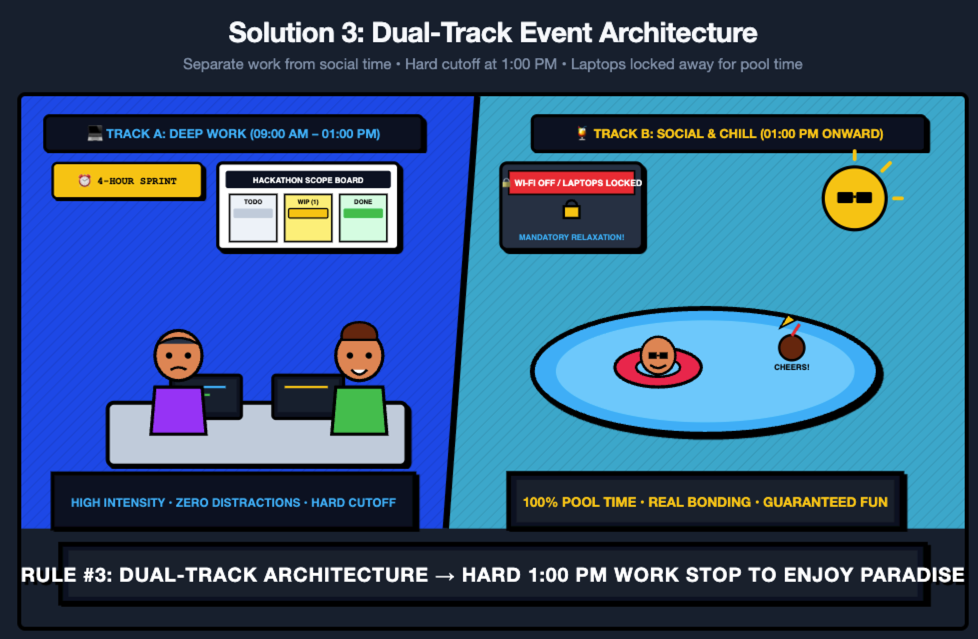
In product management, Dual-Track Agile keeps Discovery separate from Delivery. For a retreat, establish a strict physical and temporal separation between the Work Track and the Social Track:
| Track | Window | Focus | Rules |
| Track A: Deep Work | 09:00 AM – 01:00 PM | Hackathon / Strategy / Demos | Laptops open, intense focus. |
| Track B: Social & Chill | 01:00 PM Onward | Pool, Beach, Free Time, Drinks | Wi-Fi off, laptops shut. |
By creating a hard operational boundary at 1:00 PM, you eliminate “deadline drift” and give your team permission to disconnect without feeling guilty.
4. Pitch-First / Low-Code Evaluation
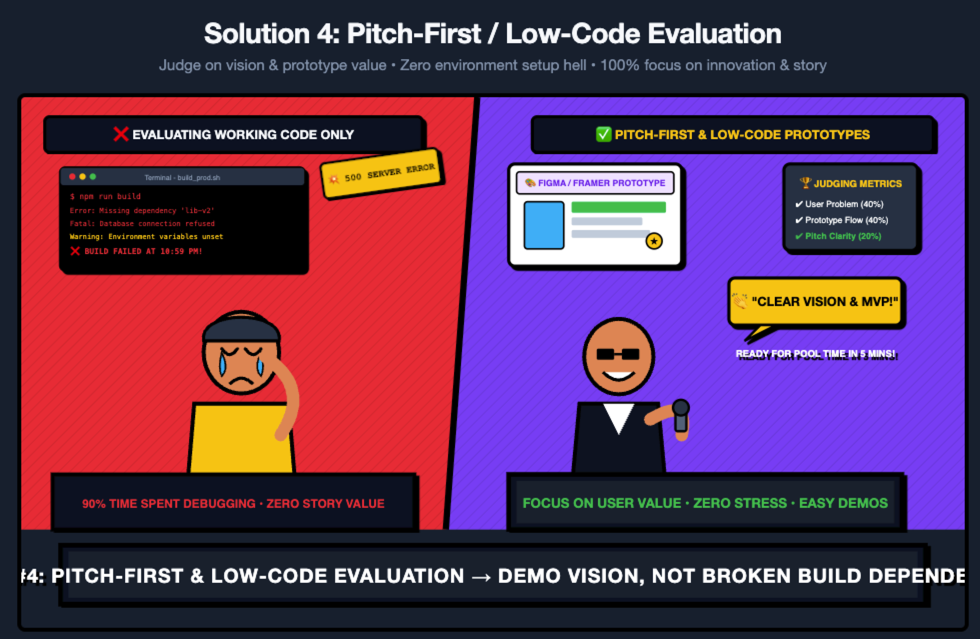
Evaluating hackathons solely on working code forces engineers into high-stress troubleshooting. Shift evaluation criteria toward problem-solving, user value, and pitch quality:
- Encourage low-code tools, wireframe flows, or canvas presentations.
- Reduce technical friction so the team spends energy on creativity and collaboration, not environment configuration.
Final Thoughts for Engineering Leaders
The ROI of an offsite isn’t measured in the lines of code pushed during a 48-hour stay. Code can be written anywhere.
The real value of an offsite is building trust, psychological safety, and shared memories across a distributed team. By applying agile scope limits and timeboxing to the event itself, leadership can ensure teams return home with both innovative ideas and fond memories of time spent together.