
A cold pizza, a false “delivered” status, and a tracking screen stuck in the last decade — what one late-night Domino’s order says about app design in an age of AI.
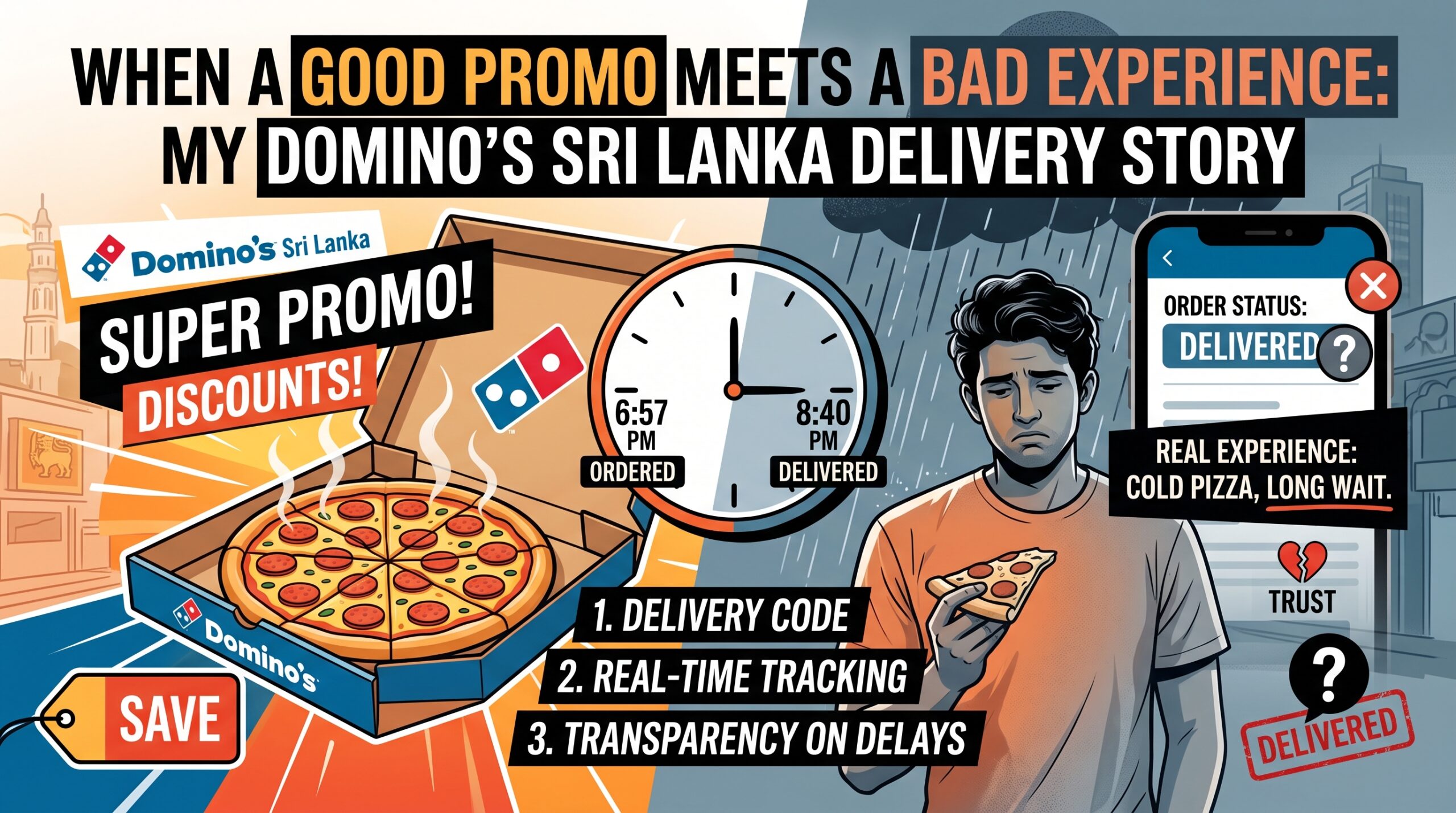
Yesterday I ordered pizza from Domino’s Sri Lanka. There was a really good promo running, so I placed my order at 6:57 PM.At 7:58 PM, the rider called and said he was 10 minutes away. A few minutes after that call, the app updated to show the order as “delivered.” Except there was no pizza at my door.I called the call center. They told me it wasn’t an issue and that the pizza would be delivered in 10 minutes. I waited. 8:20 PM came around — still no pizza. It finally arrived close to 8:40 PM, almost two hours after I’d ordered it.
By then, the pizza was cold. The garlic bread was cold. And the taste just wasn’t the same as it usually is on a normal day.
The Lesson for Customers
I think there’s a lesson in here for all of us as customers: be careful when there’s a promo running. Demand spikes, and if the company hasn’t planned properly for that spike, you’re the one who ends up paying the price — with a cold pizza and a wasted evening.
But that lesson shouldn’t have to exist in the first place. Not if the company actually thought about the user experience behind the promo.
Where the System Actually Failed
A few things stood out to me as real, fixable problems, not just bad luck.
The app marked my order “delivered” before it was delivered. This is a basic trust issue. Uber and other delivery platforms solved this years ago with a delivery code — the rider can’t mark an order complete until the customer gives them a code at the door. Something that simple would have caught this immediately instead of leaving me chasing a call center for an order that “technically” no longer existed in the system.
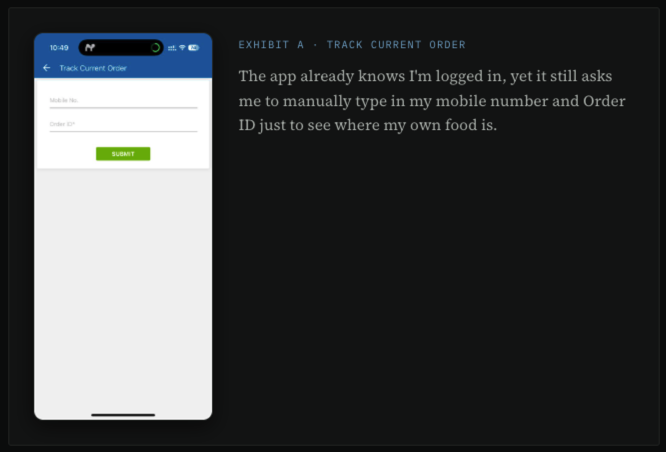
Order tracking is still very manual. In 2026, in an era where AI can predict delivery windows down to the minute, there’s no real reason an app should leave customers guessing where their order is. On Domino’s, the “Track Current Order” screen actually asks you to manually type in your mobile number and Order ID just to check where your own food is. That’s the opposite of a smart app — I’m already logged in, the app already knows exactly who I am and what I ordered. Why am I re-typing details it already has? E-commerce platforms like AliExpress, Temu, and Daraz manage to give a fairly accurate picture of where an order stands and when it’ll arrive, automatically, no manual lookup needed. Food delivery, if anything, should be even more precise, since the stakes — a hot meal, not a package that can sit for days — are higher.
There’s no arrival estimate anywhere, not even at checkout. I went back and looked at my cart before paying. There’s a carousel for add-on items, a whole section for coupons and “Best Offer” savings, a Cheesy Rewards points tracker — but not a single line telling me when I could expect the order to arrive. If an app has enough intelligence to nudge me to add Rs.569 worth of items for reward points, it certainly has enough data to give me an estimated delivery window before I hit “Pay.” That gap says a lot about where the priorities sit: upsell first, honesty about delivery time, an afterthought.
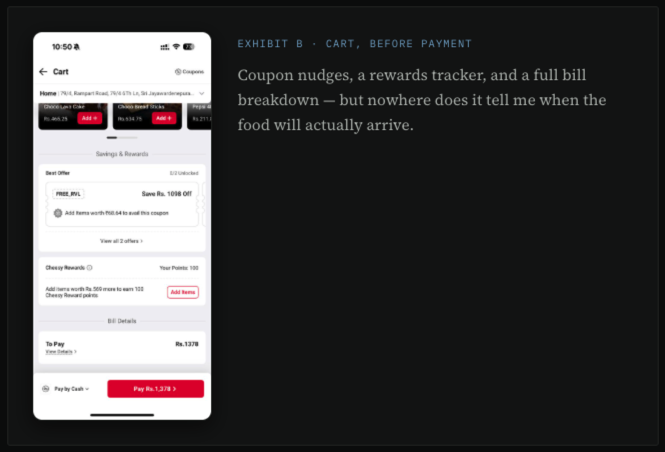
If Domino’s knows a promo is going to spike order volume, the app should be able to say so — right there on the cart screen, in the same space currently used for coupon nudges.
Transparency shouldn’t be optional. “Due to high demand, your order may take longer than usual” is one sentence. It would have completely changed my expectations — and probably my mood — while I waited.
The Call Center Isn’t the Problem
I want to be clear about one thing: the call center agents I spoke to were doing their best. They were polite, they tried to help, and honestly, they seemed just as helpless as I was. The problem isn’t the people on the phones. The problem is that they’re working with the same broken visibility into the order that I had — no real data, no real answers, just a script that says “10 more minutes.”
That’s not a people problem. That’s a process and systems problem.
What Needs to Change
Sri Lankan companies run promos, and that’s good for customers — but too often they launch without enough thought for what happens to brand and quality once demand actually shows up. User experience should tell you, with reasonable confidence, when you’ll get your order — the same way any decent e-commerce platform already does.
- Delivery confirmation codeSo “delivered” actually means delivered, not just marked so.
- Real-time order trackingAutomatic, account-linked status — not a manual mobile number and Order ID lookup.
- Upfront, honest ETAsEspecially during promos, when demand spikes are foreseeable.
Promos should make customers feel like they got a great deal. They shouldn’t come at the cost of a cold pizza, a two-hour wait, and a call center team stuck apologizing for a system that let everyone down.
The Fix: What Process Was Missing
This wasn’t bad luck — it’s a process gap. Here’s the flow that broke, and the flow that would have held.
Service Blueprinting
Maps the customer journey against backstage steps on one timeline — would have exposed “delivered” having no real confirmation behind it.
Kanban with WIP limits
Caps orders once kitchen/dispatch is saturated, instead of accepting endless promo volume the backend can’t absorb.
Capacity planning pre-launch
Treats a promo like a release: load-test rider and kitchen capacity, cap redemptions to what the team can actually deliver hot.
Shared status model
One real-time order status that app, rider, and call center all read from — not three different pictures of the same order.